Agentic AI,
Explained
What is agentic AI?
Agentic AI refers to AI systems that take actions toward a goal, often across multiple steps, not just respond to prompts.
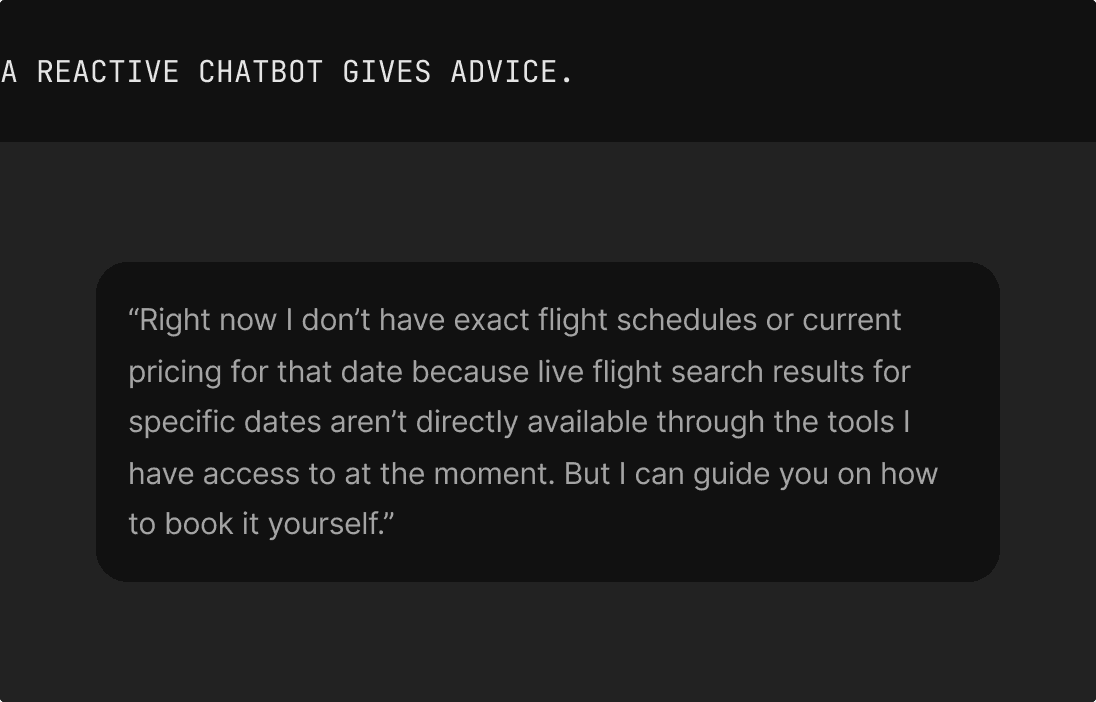
A chatbot is reactive: You ask a question, it answers.
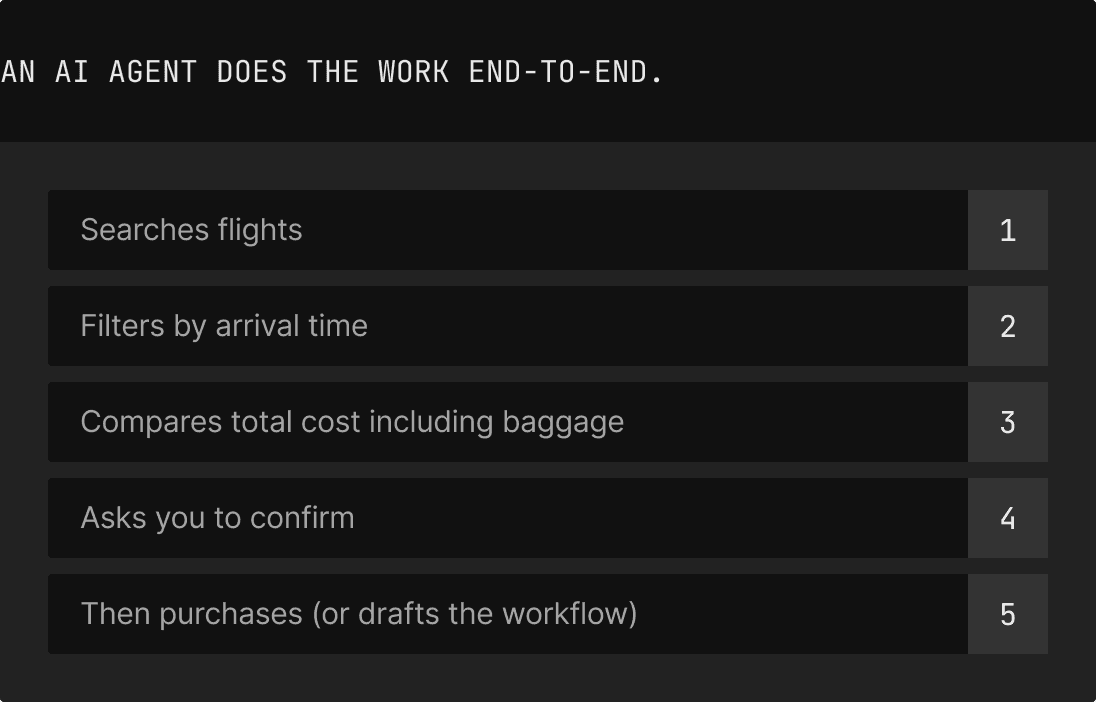
An AI agent is goal-driven: You give it an objective and constraints. It figures out what to do next, in what order, and how to recover when something goes wrong.
AI agents can:
Plan a sequence of steps
Act (call tools, send requests, write code)
Observe results and update its plan
Repeat until the task is complete
Agentic AI is less like "a smarter Google," and more like "software that can do knowledge work on your behalf."
Example
Goal: "Book me the cheapest flight that arrives before 6pm."
How it fits with AI you already know in security
Here’s how agentic AI compares to other types of AI in cybersecurity:
Rules and heuristics: If X happens, do Y
AI summarization: Writes summaries of alerts or incidents
AI scoring: Tweaks prioritization, leaves manual follow-through
AI copilots: You ask questions, it answers, humans still execute
Agentic AI: Does the investigation and coordination work
Note: These aren't mutually exclusive. The best systems combine them with rules for safety, ML for scoring, LLMs for language, and agents for execution.
How agentic AI helps with vulnerability management
You've probably seen tools add AI to vulnerability management. Usually that means:
AI summarizes findings (you still do the work)
AI generates risk scores (without showing you why)
AI suggests remediation (but doesn't verify it makes sense)
Agentic AI is different. It actually does the work:
Investigation work
Tracing asset context across disparate enterprise data sources, while factoring in the nuances of the organization
Coordination work
Bundling vulnerabilities into shippable actions, creating context-rich tickets, routing to the right teams.
Verification work
Validating that remediation actually happened by checking scan results, deployment logs, configuration state.
Reporting work
Generating executive dashboards and narrative summaries, work that typically requires a separate BI tool.
What "AI-native" means in a product
AI-native tools aren't just integrated with AI, they're architected for it. It means AI is built into how the product understands your environment, reaches decisions, and moves work forward.
The building blocks of an AI-native, agentic product:
Live data foundation
Continuously syncs from systems that reflect reality: scanners, cloud platforms, CMDB, ticketing, repos.
Models
Not just a single general-purpose LLM. A mix of models and domain training for defensible decisions, not generic suggestions.
Grounded retrieval
Pulls exact facts from trusted sources at the moment of work so responses are evidence-backed, not guesswork.
Reasoning
Plans multi-step work, tracks what it already tried, picks up where it left off. Like a real workflow, not a one-off answer.
Workspaces
Purpose-built interfaces where humans review, collaborate, and steer the system beyond a generic chat box.
Transparency
Shows its work. Traceable reasoning and explainability: what it did, when, why.
Guardrails
Permissions, approval gates, audit logs, validation checks. If AI can act, you need control and accountability by default.
A chat box layered on the same dashboards
One-shot answers that can't track progress end-to-end
No clear sourcing or "show your work" capability
No workflow execution, humans manually create tickets and route work
Hard to audit what happened and why
Why AI-native architecture matters
It allows flexibility for different situations
Brittle rules-based logic often breaks when presented with new scenarios, requiring painstaking manual configuration.
It turns insights into completed work
You don't just get "what's risky", you get a workflow from context to decision, action, and validation.
It enables safe automation over time
As teams build trust, you can expand autonomy in a governed way without losing human authority or auditability.
NEXT
Go deeper on agentic AI



FAQ
What's the difference between an agent and an AI "copilot"?
What's the difference between an agent that reasons and an automation?
Are AI agents "autonomous"?
Will AI agents replace jobs?
What are "multi-agent systems"?
Where do agents fit in a vulnerability management program?
How do agents validate a vulnerability instead of just summarizing it?
What does "human-in-the-loop" look like for agentic vulnerability workflows?