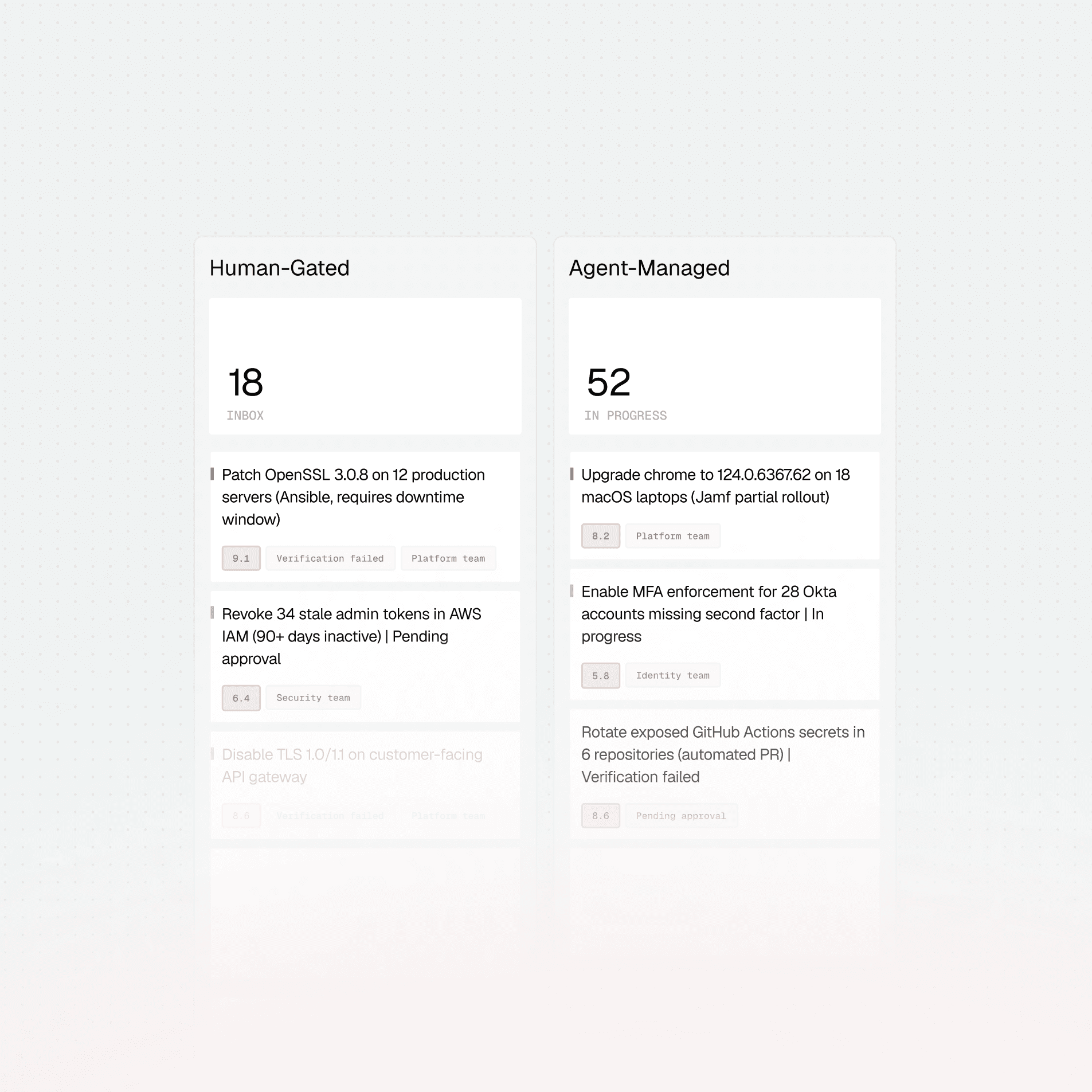
Platform
Assess
Know which risks matter
in your environment
Cogent’s AI agents build a complete picture of your assets and risk, then score based on real exploitability and business impact, not just CVSS severity.

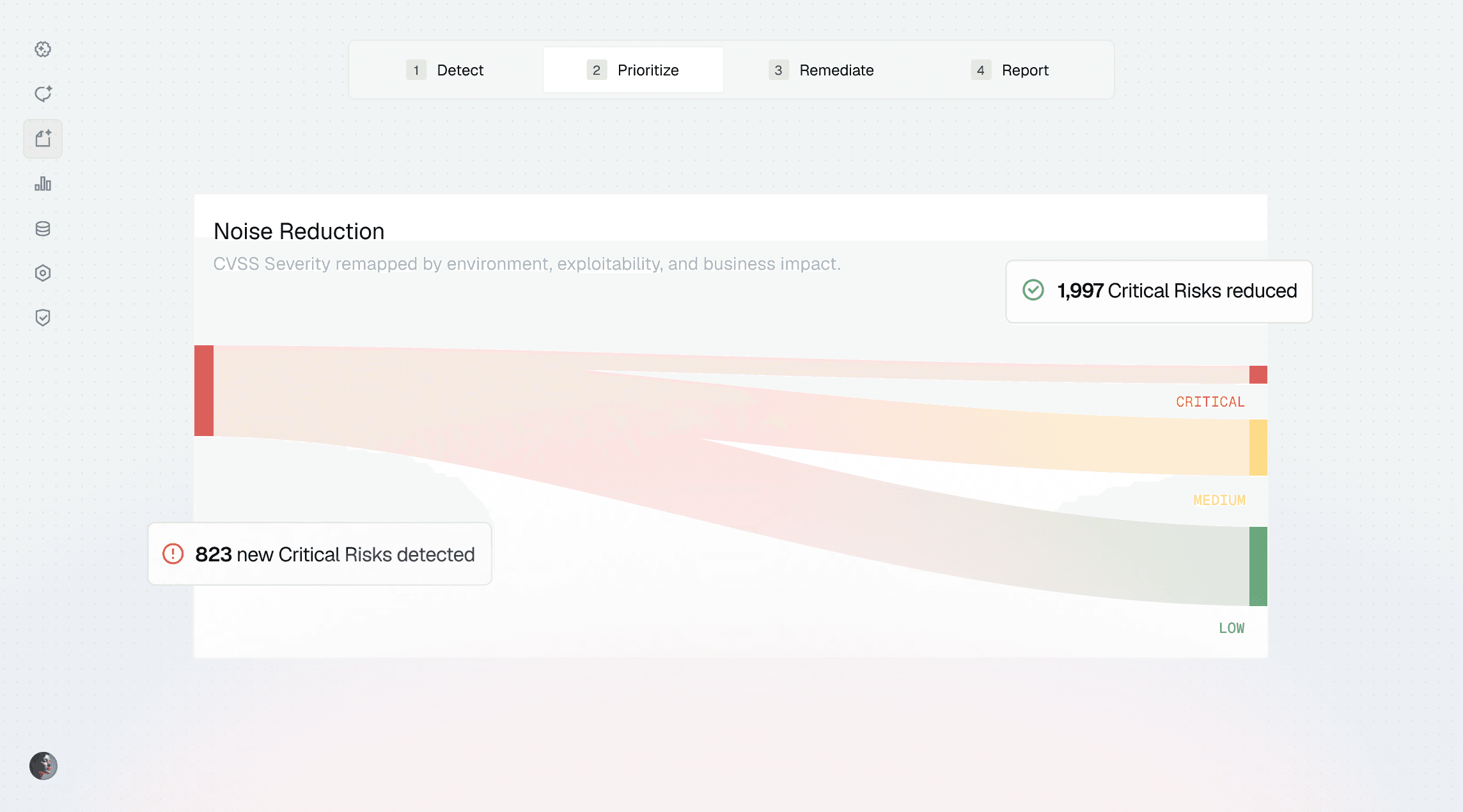



Cuts through scanner noise with environmental context
Your scanners flag thousands of "critical" vulnerabilities. Most aren't actually serious risks in your specific environment. Cogent figures out which ones are.
Evaluates real exploitability
Not just "does an exploit exist?" but "can it actually be exploited given the setup of our environment?"
Identifies true internet exposure
Traces data across tools to gauge what's genuinely reachable from the internet.
Accounts for compensating controls
Checks whether you have key mitigations in place that reduce effective risk. Flags critical gaps where controls are missing.
Responds to threats as they emerge
When a threat drops, you need answers fast. Cogent tracks active exploitation and emerging threats across dozens of sources so you know what's urgent right now.
Continuous threat monitoring
Pulls from CISA KEV, NVD, exploit databases, security research, and social media to detect when vulnerabilities are being actively weaponized.
Instant risk re-rating
As new threats emerge or your environment changes, Cogent re-scores findings automatically. No manual re-evaluation across thousands of results.
Surfaces emerging threats early
Catches emerging exploits and threat actor activity as they develop, giving your team time to respond before vulnerabilities become incidents.
Understands business impact to focus resources
Not all vulnerabilities affect your organization equally. Cogent prioritizes based on what actually matters to your business.
Considers business criticality
Revenue-generating services, customer-facing applications, and critical infrastructure get weighted higher than low-impact systems.
Factors in data sensitivity
Systems handling sensitive or regulated data receive appropriate priority based on potential breach impact.
Adapts to your business priorities
Customize risk weights to reflect what matters most to your organization, so findings that affect your most important systems surface first.
Explains every decision so teams align
Generic severity scores create friction between security and engineering. When every score comes with clear reasoning, teams trust the priority list and act on it faster.
Clear factor-by-factor breakdowns
See exactly what drove each risk score. No black box.
Confidence levels on every assessment
Know how certain the analysis is. High-confidence information can be acted on quickly. Lower-confidence items can be reviewed by humans before escalation.
Exec-ready justification
When leadership asks "why are we focused here?", you have data-backed answers showing how resources align to actual business risk.
Next Up