Blog
Technology
Figma Never: Code Is the New Canvas
AI code generation killed the Figma-first workflow. Cogent's design team now ships directly in code, and the results are faster and better.
2 min read


At the end of October, I published an article called Figma Last.
The thesis was simple. Stop starting in Figma. Validate earlier. Build sooner. Figma should not be first. It should be last.
A few months later, that workflow has become unrecognizable.
That is how fast this is moving.
Back then, I was reacting to Figma First. The default loop. Open a blank canvas. Design static mocks. Annotate edge cases. Hand off. Wait for engineering to reinterpret your intent.
Figma Last moved validation closer to execution.
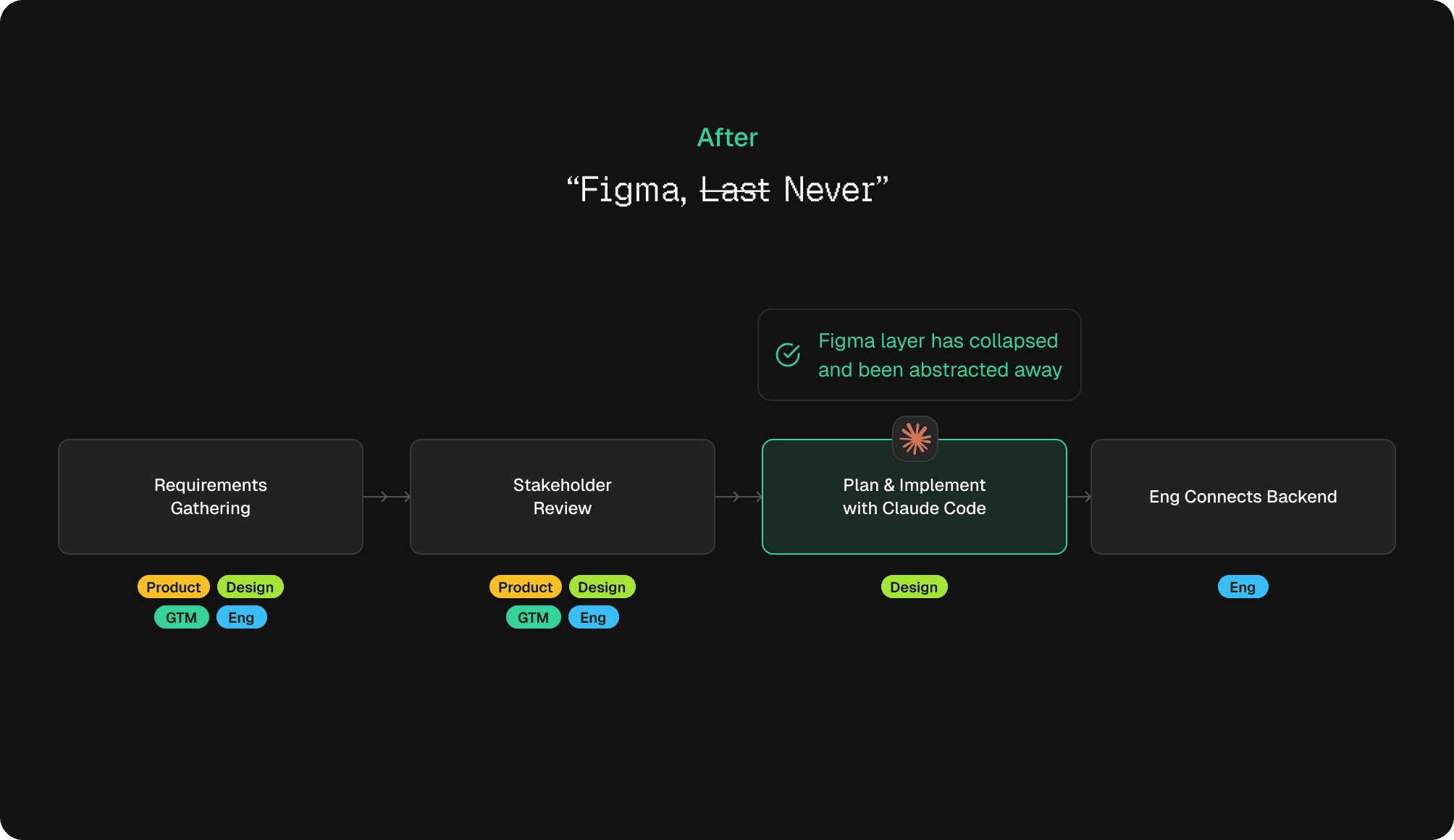
Figma Never removes the abstraction entirely.
Today the work starts in the terminal.
Before a single UI component exists, I open Claude Code in plan mode through the CLI. I create a design PRD. Not a bloated template. A sharp articulation of the problem, flows, constraints, tradeoffs, and edge cases. I use it as a thought partner. I challenge assumptions and simplify complexity before it hardens into UI.
Then we build.
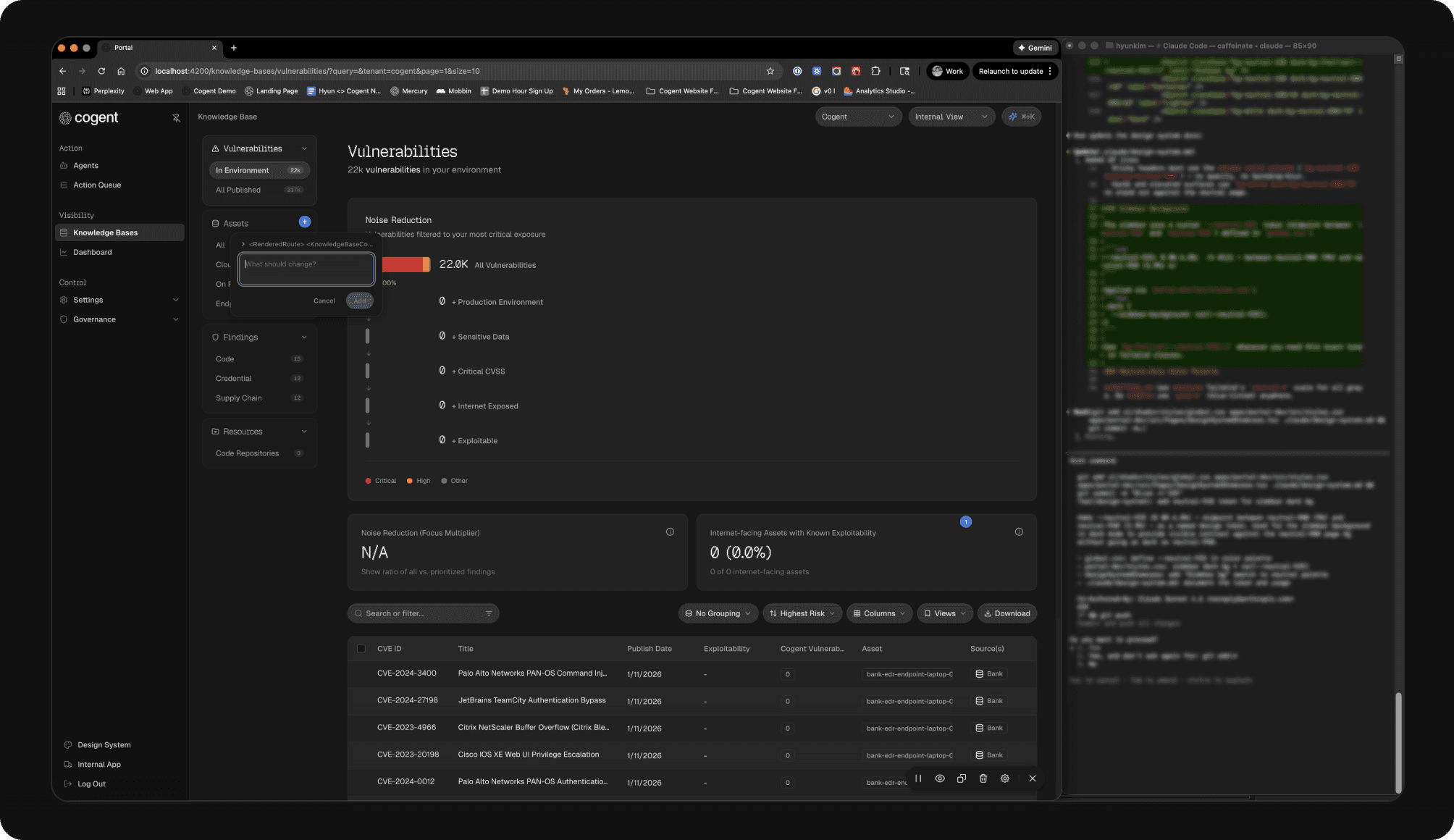
I pair Claude Code with Agentation (annotation tool) to structure intent and generate components aligned to our system. I scaffold. I iterate. I push to a dev environment.
Within hours, there is something real. Engineers wire the backend. Data flows. States behave. Edge cases surface immediately. We refine inside the product, not in a picture of it.
This shift has dramatically increased my productivity. But the more meaningful change is how I see my role. I think less in terms of product designer or design engineer and more in terms of a builder.
Because that is what this actually is.
I can shape high level flows in the morning and tune micro animations in a tab icon in the afternoon. I can adjust motion curves directly in the component. I can test hierarchy against live data instead of placeholder states. The control is immediate.
For the first time in my career, something feels unlocked. Architects historically drafted buildings they never physically constructed. As software builders, we now conceive and build in the same medium.
The system itself has changed too.
I injected my design taste into Claude as a skill. My preferences around spacing, density, hierarchy, motion, and interaction patterns. My bias toward clarity. My intolerance for noise. It understands how I think about UI/UX.
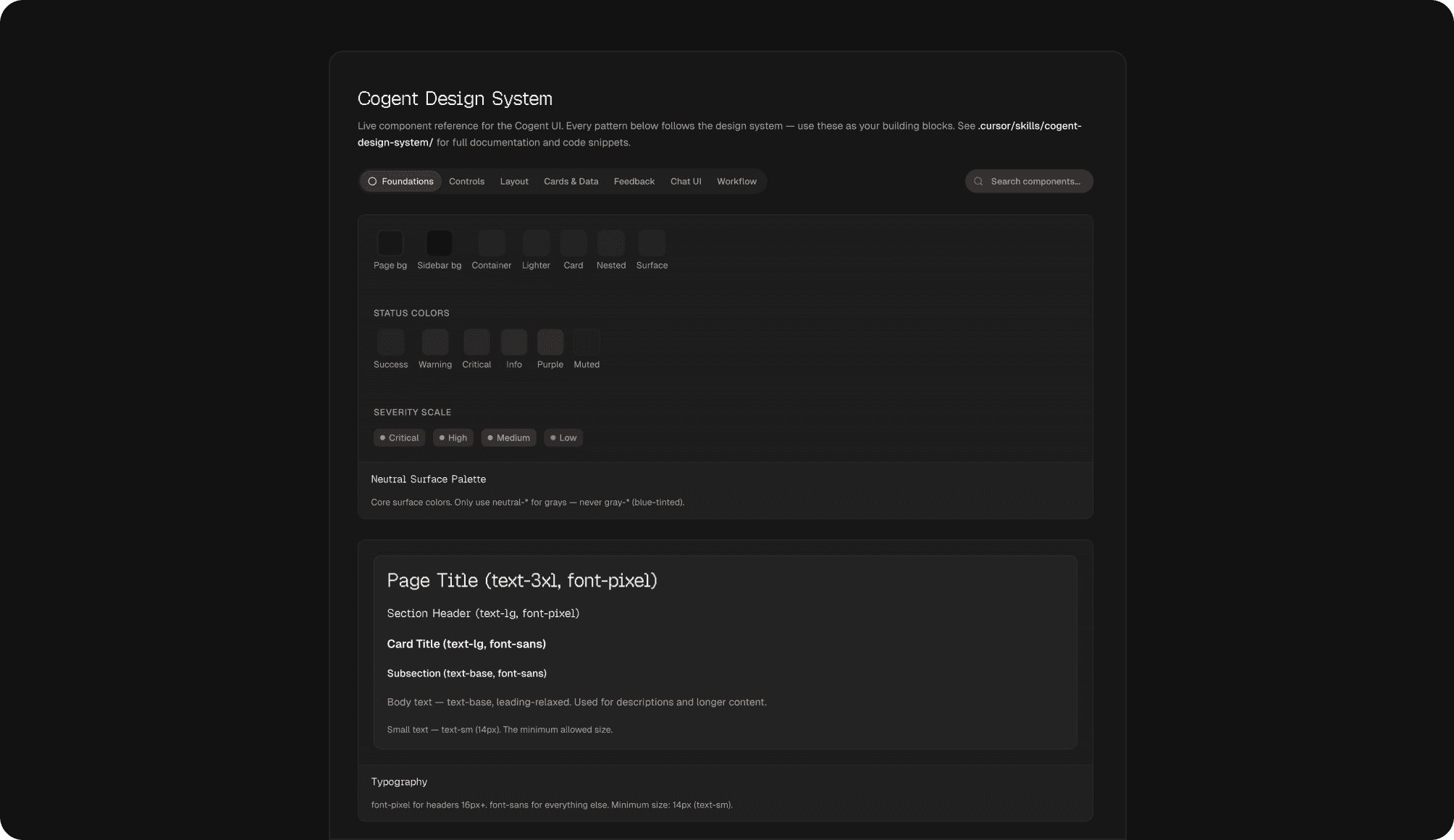
My design system is no longer a static document. It is encoded behavior.
I built a lightweight internal Storybook that acts as a living source of truth. It is visually browsable but fully manipulable in code. Tokens, variants, motion primitives all live where they execute. When new features are generated, they align automatically because the system is embedded upstream.
This is the real progression.
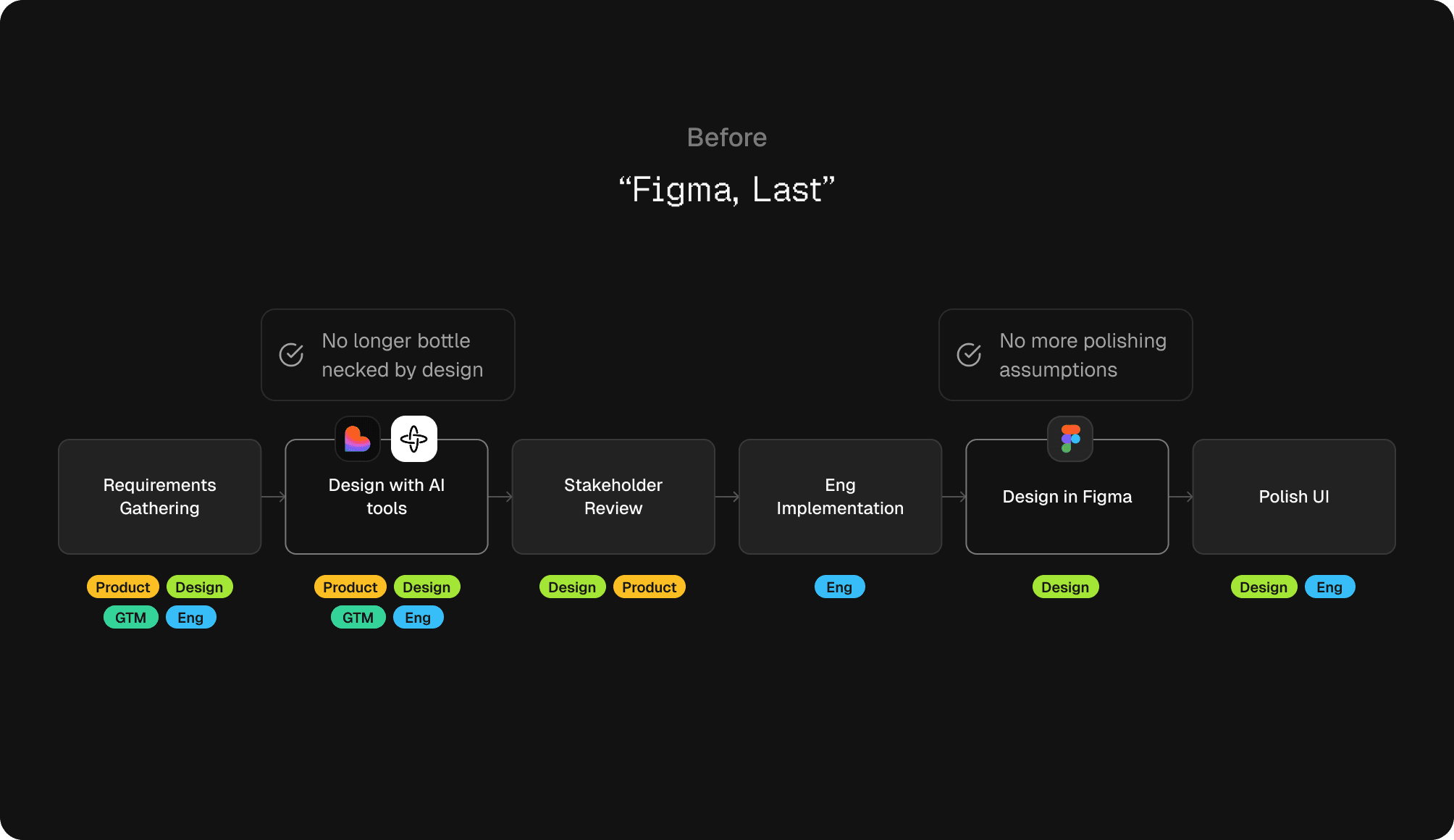
Figma First was static ownership.
Figma Last moved validation closer to engineering.
Figma Never removes the layer entirely.
Code is now the shared material. PMs express intent in text. Designers shape experience structurally. Engineers enforce systems integrity. We meet at execution.
And once you work this way, going back to Figma feels primitive. It feels like stepping out of a living system and into a drawing of one.
The shift happened fast.
Figma First was default.
Figma Last felt radical in October.
Now Figma Never feels inevitable.
We do not design pictures of software.
We design software.
If you are still spending most of your time in Figma pushing pixels, managing pristine component files, writing spec-heavy PRDs disconnected from execution, annotating hover states that only exist in comment bubbles, and presenting static mocks that simulate behavior instead of proving it, you’re optimizing for irrelevance.