Blog
Product
What's New in Cogent: A More Powerful Action Queue and Advanced Filtering
Organize remediation around your team's workflow, and build more precise views of risk across your environment.
4 min read


Security teams spend a lot of time moving between tools to understand risk, organize remediation work, validate findings, and get the right context to the teams responsible for fixing issues.
Our latest updates make those workflows easier to manage. The Action Queue is more flexible for organizing remediation across teams. Knowledge Bases get advanced filtering and complete source data. And new controls for SLAs and ticketing make it easier to carry remediation policies into day-to-day operations.
Organize remediation around your workflow
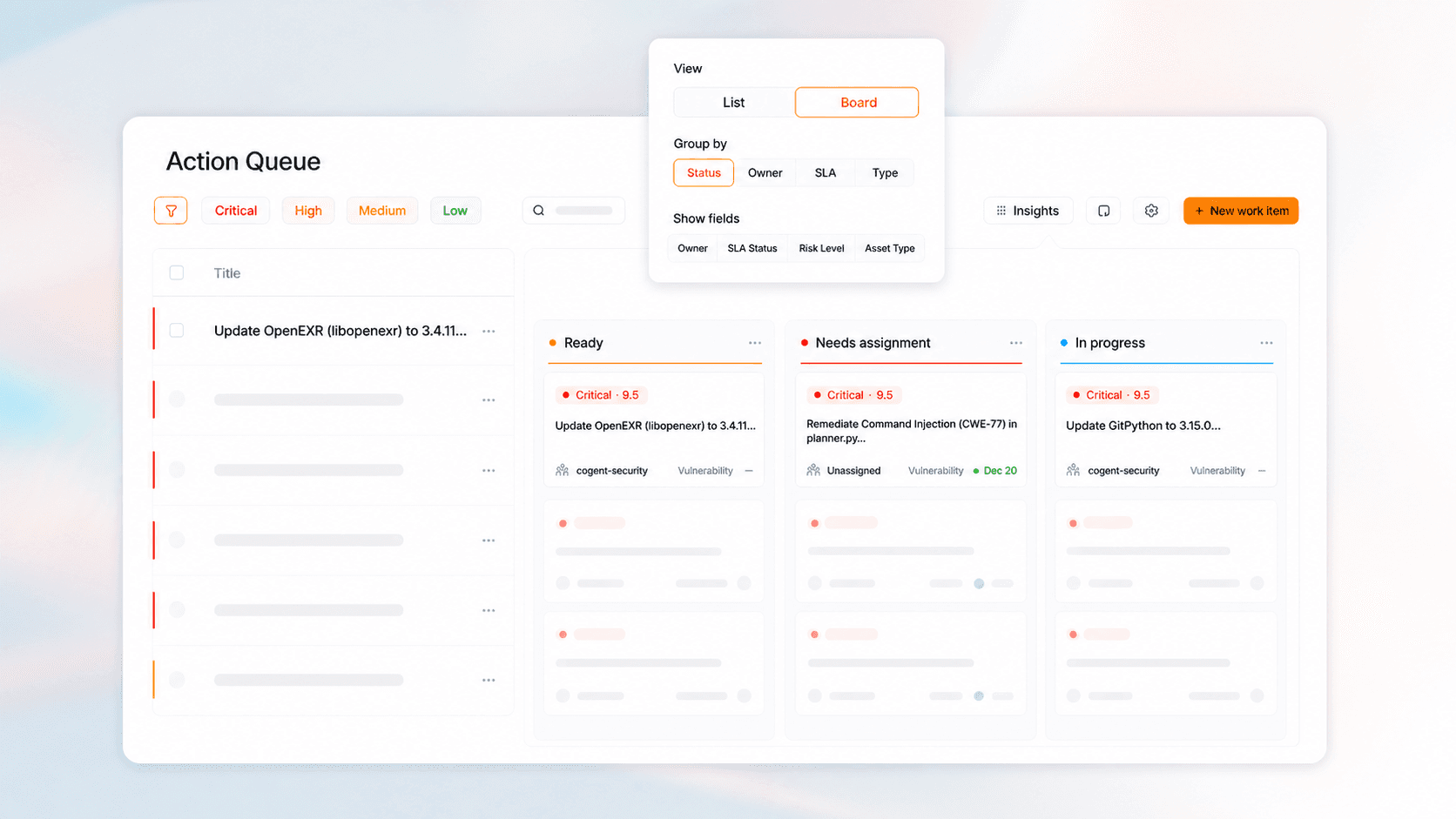
Different teams need to look at remediation work differently. A vulnerability management team might organize work around approaching SLA deadlines, while an engineering lead might care more about ownership and status.
The redesigned Action Queue gives teams that flexibility.
Teams can switch between list and Kanban-style board views, customize the information they see, and group Work Items by attributes such as status, owner, SLA, and type.
This gives teams a shared remediation backlog without forcing every team into the same way of working. Security can prioritize what needs to happen, while remediation teams can organize that work around the way they already operate.
Build exactly the view you need
Security investigations rarely fit neatly into a single filter.
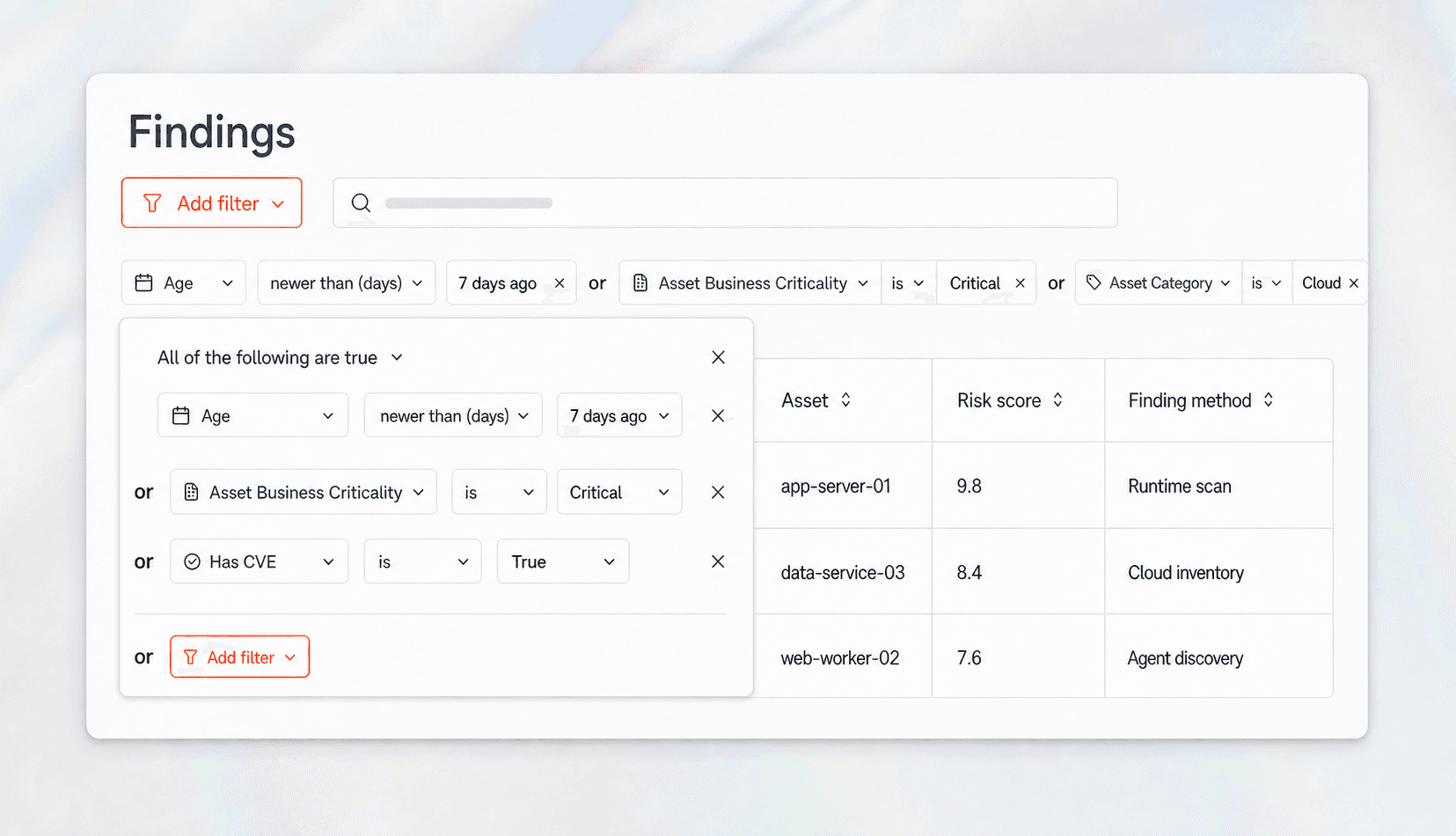
Advanced Filters in the Knowledge Bases now support AND/OR logic, grouped conditions, and nested filter groups across Findings and Assets.
For example, a team could look for critical findings on internet-facing production assets, while also including findings with known exploitation on business-critical systems.
Filters can combine asset, finding, and risk attributes, making it possible to create views that reflect how teams actually investigate and segment risk across their environment.
Inspect the data behind every finding
When a finding looks unusual, analysts often need to go back to the original security tool to understand exactly what it reported.
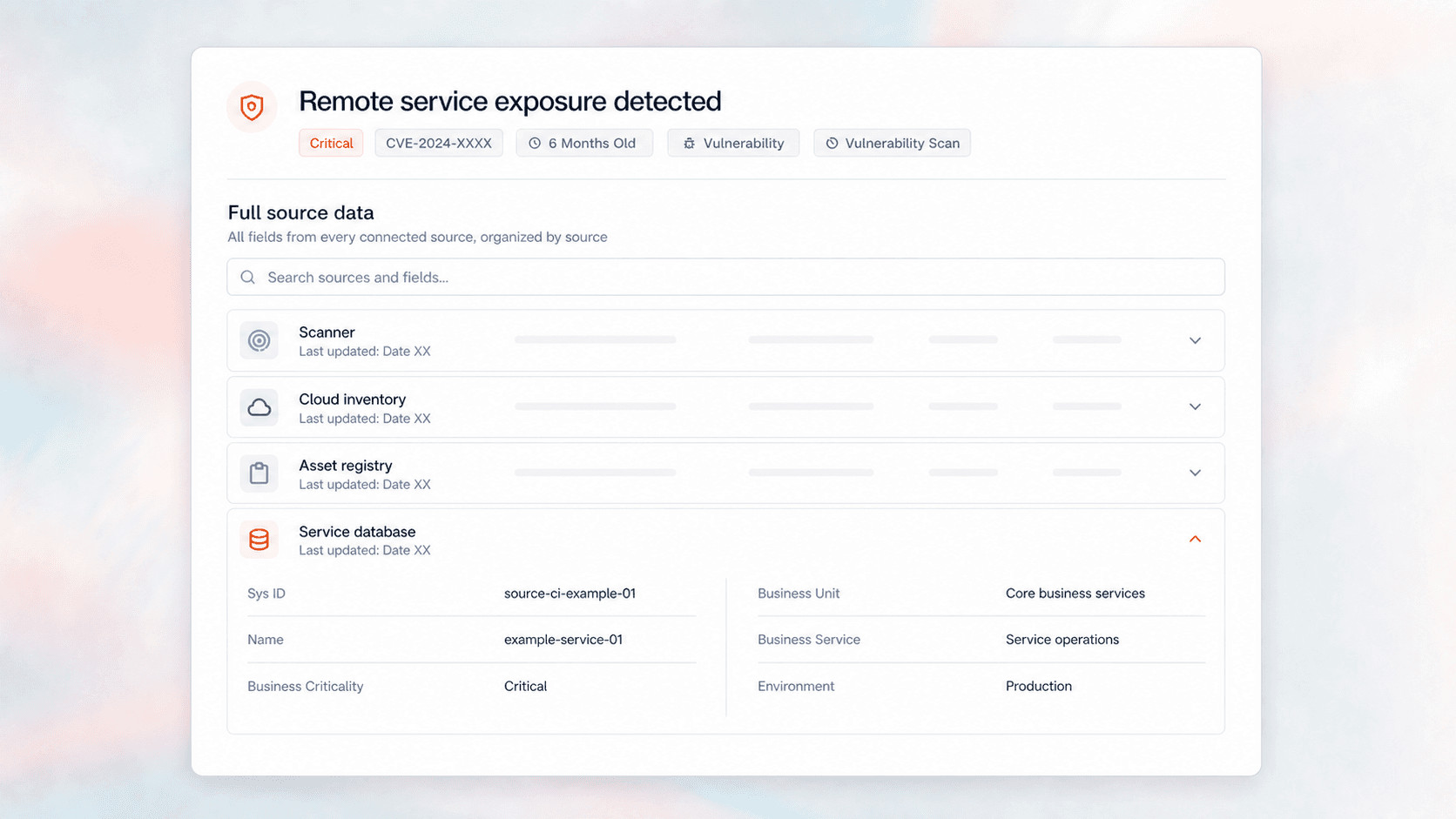
Full Source Data now exposes the underlying fields Cogent has ingested for a finding or asset directly in the Knowledge Base.
Data from scanners, cloud platforms, threat intelligence providers, code repositories, and other connected tools is organized by source. When multiple sources contribute context to the same finding or asset, teams can see what each one reported.
Analysts can validate findings, investigate discrepancies, and understand the data behind Cogent's decisions without moving back and forth between source tools.
Make remediation deadlines reflect actual risk
A critical vulnerability on an internet-facing production system may require a very different response from the same vulnerability on an isolated development asset.
Cogent's SLA policies can account for that context.
Teams can define remediation timelines based on factors such as internet exposure, business criticality, asset type, attack vector, known exploit status, and other asset attributes, rather than relying on severity alone.
Teams can also determine when remediation timelines begin, whether that's when a finding is first seen, published, or dispatched for remediation. The same policies are enforced across Cogent, giving security and engineering teams a consistent understanding of what needs to be fixed and when.
Make every remediation ticket ready for action
Creating a ticket is only useful if the team receiving it has the information they need to act.
Ticketing Templates let teams define how Cogent creates tickets in their connected ticketing systems, including Jira and ServiceNow, so remediation work fits into existing operational workflows.
Templates can automatically populate required fields such as security team, business service, finding severity, compliance classification, and assignment group. Organizations can configure different templates for different projects, ticket types, teams, or workflows.
This removes repetitive ticket preparation and helps security teams hand off remediation work with the context and structure remediation teams already expect.